The Boy Who Coded on Cardboard

The Boy Who Coded on Cardboard
Growing up in socialist Bulgaria, coding became Lubomir Bourdev’s canvas— a place where the discipline of rules and the freedom of writing the rules converged.
When Lubomir Bourdev was a teenager in rural Bulgaria, his father gifted him a book on computer programming. Shaped by a socialist society with clear rules and expectations, the concept of expressing intangible thoughts through the exactness and precision of code was fascinating to Lubomir. Without access to a computer, he meticulously wrote line after line of code with pen and paper. Eventually, Lubomir decided that if he didn’t have a computer, he would just build one. He began crafting a mechanical keyboard out of cardboard, shaping each key so he could tap his fingers across them and imagine what it might be like to actually program. At that point, his father understood the significance of his first gift and bought him a second one – a personal computer, cementing Lubomir’s future path.

Shaped by Precision & Adapting to Ambiguity
Growing up in socialist Bulgaria meant being part of a world built on strict order and discipline. Uniforms, morning drills, and unbending rules defined schools. Students greeted their teachers in unison, stood in regimented rows, and risked expulsion if they missed too many days. For Lubomir, who always disliked ambiguity, this environment provided clarity and structure. Yet it also drove an appreciation for the moments where creativity could thrive.
When the Iron Curtain fell, the rules evaporated, and the sudden freedom was disorienting for Lubomir and his classmates. While some students reveled in the freedom, pushing well beyond the new limits, Lubomir never abandoned his respect for structure. Instead, he simply held himself to the same expectations, while exploring the freedom of looser boundaries.
That same pattern of adapting shaped his transition to the United States. When Lubomir arrived at Brown University, he believed his English was strong — but the rapid pace of conversation left him struggling to follow conversations or understand jokes and slang. Rather than accept the confusion, he simply engineered a solution by creating conversational “if/then” trees for himself. He would rehearse responses as though they were lines of code branching into multiple outcomes. If someone asked one question, he had the answer; if they went in another direction, he had a fallback. For months, he programmed his own fluency, finding clarity inside the ambiguity of a new culture.
Life’s Work: Pursuing Elegant Solutions
After completing a special program at Brown, Lubomir earned both his bachelor’s and master’s degrees in engineering within just four years. Lubomir then joined the Advanced Technology Group at Adobe for what was intended to be a one-year program for people who don't have a PhD. However, Adobe loved what Lubomir was doing and asked him to stay, eventually sponsoring his Ph.D. at the University of California, Berkeley.

During his thirteen years at Adobe, Lubomir solved some of the most challenging technical problems. One of them is pioneering face-detection software, a technology that would become ubiquitous years later but was unfortunately not utilized in Adobe products. Lubomir also further embraced the creativity of writing code in pursuit of what his mentor at the time, Alex Stepanov, creator of the Standard Template Library in C++, called the "perfect code." Lubomir explains, “He completely changed how I was thinking about code. My passion became writing elegant and simple code – as the great mathematician Paul Erdős described, he believed God kept a book of the most elegant and perfect proofs of all mathematical theorems – and that’s what I began seeking in code.”
After fierce competition from Google, Facebook, and Amazon, all of which tried to recruit Lubomir, he ultimately chose Facebook following a phone call from Mark Zuckerberg that won him over. At Facebook, Lubomir worked on computer vision, including the development of scene recognition technology used on the platform’s trillions of photos and videos, and was a founding member of Facebook AI Research.
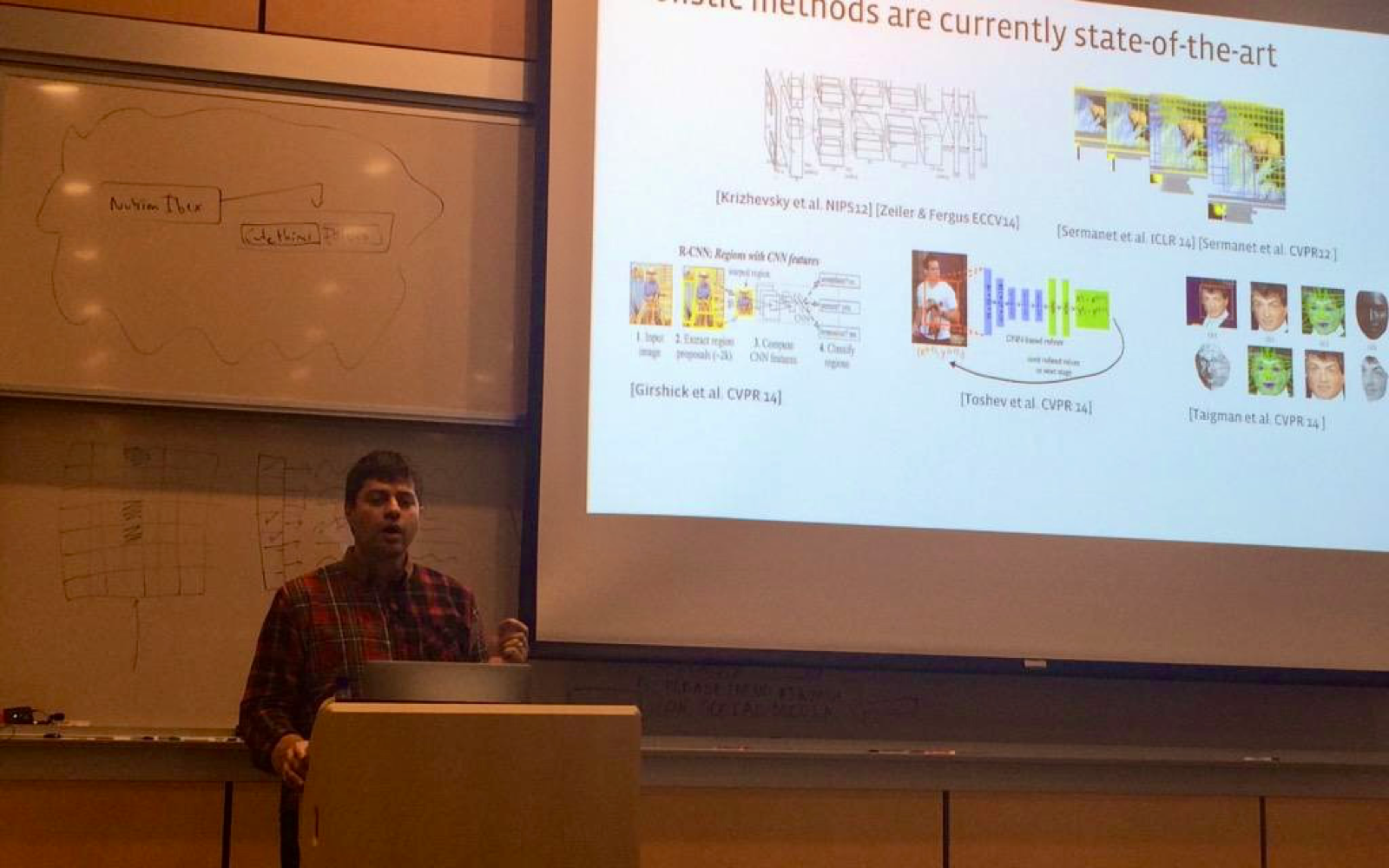
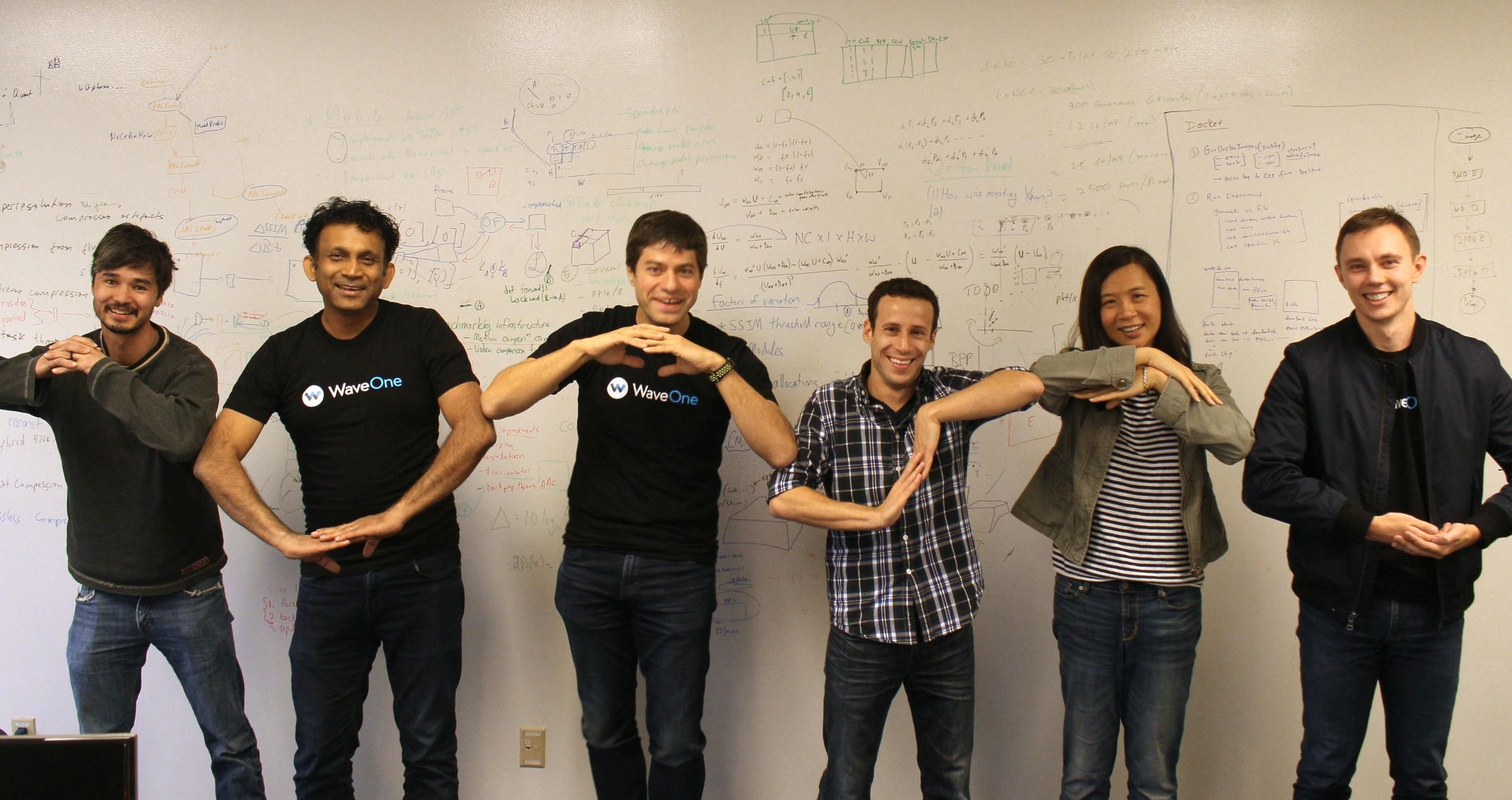
During Lubomir’s brief downtime, he began watching the television show Silicon Valley, which follows a fictional startup developing a new form of data compression. This well-known technology limitation had yet to be solved, at least in the real world. He couldn’t shake the notion that he actually knew how to solve this problem by using neural networks to predict and encode video far more efficiently. The idea was elegant and precise, quickly capturing Apple's attention. The company acquired Lubomir’s company, WaveOne, as an ideal fit for its ethos of being at the intersection of precision and creativity.
Seeking the next appealing technical challenge, Lubomir gravitated toward an often-overlooked industry: construction. Recalling his days building LEGO bricks as a kid, Lubomir began to learn everything he could about construction design and quickly saw how existing LLMs weren’t built to understand or decode any of it. Along with his co-founder, Lubomir began developing construction-specific intelligent systems capable of truly understanding the complexities of such technical and often confusing documents. Today, Primepoint’s proprietary AI technology is addressing the complexities of construction management that led to a $1.8 trillion loss in global productivity in 2020 alone.
From the discipline of socialist classrooms to the ambiguity of American universities, from cardboard keyboards to Silicon Valley startups, Lubomir’s life has been defined by a single drive: finding freedom in pursuing precision. His creativity has always been in service of precision, his solutions elegant not because they are easy, but because they endure.
Up next

Avalanche Hoops Game ‘Rumble Kong League’ Nets Gatorade Deal

Raising Capital in 2025: The New Rules for Series A and B
